Leading Women in Solo Travel
Why Do Women Travel Alone?
Skill and capability are essential for solo travel and exploration.
By: Fatemeh Baghaiyan
For years and centuries, women have faced social, economic, and political discrimination… and restrictive laws around the world. Over time, through advocacy, patience, and perseverance, many changes have taken place. International Women’s Day is an opportunity to celebrate women’s achievements and to remind ourselves of the challenges and limitations that still exist in the world and in Iran as well.
One of the major challenges is solo travel for women. Globally, women face risks such as harassment and violence when traveling alone. While these issues may deter many women from traveling, by researching, reading, talking, and writing in this field for over a year, I have gained new insights and perspectives and discovered new horizons.
First, I should say what is meant by traveling alone? There are different types of “traveling alone”. You can travel alone and without family members under the supervision of a travel agency, mostly on a solo tour or a group tour, or you can plan and carry out all parts of the trip alone, from planning the trip to the end of the trip, without the help of a travel consultant. The type of trip depends on the abilities and skills of the person.
History:
In ancient Iran, many influential women had a prominent presence. Herodotus, the world’s pioneering historian, spoke in his works about Atoosa, the first poet and writer of Iran, who was the mother of Xerxes, and one of the promoters of education in his era. Artemis, the first and only female admiral in the world to date, rose to the position of admiral in Xerxes’ army in 480 BC, about 2,500 years ago. There may have been many unknown women on the path of achievement.
When it comes to travel, the written documents of women’s travel in my country goes back about 150 years to the Qajar period. The general perception of Qajar women is that they were deprived of literacy, information, and minimal social rights, while in documents, writings, and such travelogues, we find their influence and role in art, literature, culture, and politics, both in the lower and middle classes and among royal women, although all of this was hidden and behind-the-scenes.
Historians believe that these travelogues are the most reliable sources for investigating the social conditions of women during that era. Travelogue writing changed and grew favorably from the Safavid period, due to the Iranian people’s familiarity with many foreign travel book or travelogue writers who traveled to Iran, to the point of acquiring a special place and style in Iranian literature.
Travelogues with manuscripts of women of the Qajar court, which are available under the number and title “Hajj Travel Diaries” in the manuscript section of the National Library. These manuscripts were donated to this library in various forms and registered. With the research of Rasoul Jafarian, Kianoush Kiani and through the Atraf publication, three travelogues have been collected and rewritten by three modern female writers. Since all three writings are Hajj travelogues, the publication of Atraf published each one under different names.
Mehrmah Khanum Esmat al-Saltaneh, the Qajar princess and the first Iranian female travelogue writer, was the daughter of Jahanara Khanum and Farhad Mirza Motamed al-Dawlah. Her journey lasted ten months.
After her, a princess whose name we do not know but we know that she was the granddaughter of Fath Ali Shah Qajar, began a dangerous journey with many difficulties, without a husband or in-laws, with her mother, a number of servants, and a three-year-old child. The link below provides more information about the book Three Days to the End of the Sea.

Thirteen years later, Sakineh Sultan Khanum Isfahani, known as Vaqar al-Dawla, one of the women in Nasser al-Din Shah’s harem, wrote about a one-year trip to Mecca. The long stay in Karbala was very interesting and fun for her, but the long and unreasonable waits on the rest of the journey were so annoying that hearing the words “Madam! Tomorrow is a journey” at any hour of the day or night was considered the best news for her. One of the good features of this travelogue is the detailed record of her travel expenses, which amounted to five hundred tomans per person. The link below provides more information about the book “Madam! Tomorrow is a journey.”

A hundred and thirty-two years ago, Alia Khanum Shirazi set out on a long and difficult journey, sometimes fighting with men, sometimes negotiating, and sometimes parting ways. She was acquainted with great men and famous people and met with them on her journey. In Tehran, she was a guest of Nasser al-Din Shah and wrote about court customs and etiquette. A section that plays a very important role in recording the historical events of that time and introducing us to the events of the Qajar court.
There is a video about this book on Aparat, in which Navid Jamshidi has a conversation with Professor Hassan Amin about this book in the fifteen minutes that begin. It is worth watching. Watch this conversation. You can also get more information about the book “We wore hijab/chador and went to watch” from the link below.

According to records, the first woman to circumnavigate the Globe alone was French botanist Jeanne Baret, born in 1740. At the age of 26, she disguised herself as a man and made the exploring voyage, despite restrictions on women traveling by ship.

A fictional portrait of Jeanne Baret after his death in 1817, dressed as a male sailor.
Born in 1864, Nellie Bly was another adventurous woman who, after reading Jules Verne’s famous book Around the World in 80 Days, decided to set a new record for circumnavigating the globe. Despite all the ups and downs for an American woman in 1889, she managed to set the record for the fastest circumnavigation of the globe, traveling around the world in 72 days.
 |
 |
The list of women who have made efforts in the field of exploration around the world is very long and mentioning their names is both tedious and impossible in this article.
The book Desert, Mountain, Sea by Sue Leather is a narrator of the very fascinating and exciting events of three women in three dangerous and different parts of the world; desert, mountain, and sea. It is an inspiring account of the solo journey of Robin Davidson, Arlene Blum, and Naomi James and their mindset, courage, and strength to face challenges.
All three women, who experienced difficult and challenging journeys about fifty years ago, are alive and working to advance consciousness. Half a century ago, the conditions of the world were very different. There was no social media and knowledge and awareness of dangerous environments was relatively less, and this is what makes their journey even more special. You can read an article about the book in the link below.

While I was thinking about writing a series of articles about women solo travel, I came up with the idea of interviewing an Iranian woman who has been experimenting with solo travel for some time. Nazanin Motiei, author of the book “Siberia is Not Cold at All!”, is a traveler who today plans experiential trips to specific destinations with a focus on nature tourism and anthropology.
You can read my short interview with Nazanin at the link below.

Nazanin has traveled to Siberia, Russia, Pakistan, and Afghanistan. She is interested in anthropology, photography, and has a collection of dolls, hats, and handicrafts from the countries she has traveled to. In the link below, we travel with her in a photo album of some of her solo travels.
سفر به روایت تصویر / نازنین مطیعی |
 |
But here’s a very important question: Why travel alone? And women solo travel?
Nowadays, by searching for the phrase “solo travel” on the Internet, you can find a lot of information about traveling alone. Books, podcasts, personal pages, travel sites, and many forums have addressed this topic.
For several years, traveling alone has been widely and publicly recognized by travelers and travel enthusiasts, whether they are someone who has always been a traveler or someone who, for whatever reason, only watches, listens, and reads travelogues from behind a mobile phone, computer screen, and of course, from the pages of books. If more precise keywords are searched (such as women solo travel), we will be introduced to various forums and groups that all or one of them offers various services including guidance, planning, accompanying, and implementing the trip.
Emma Dressler wrote an article titled “Women Journeying Alone: Exploring Soltitude Across the Life Stages, Current Issues in Tourism,” which is available at this link. The article was published on June 8, 2024, and explores the reasons for women traveling alone.
Dressler writes in the abstract that an increasing number of women of all ages are traveling solo. The study, based on discussions from solo travel forums collected from TripAdvisor, is a study that examines the experiences of women who have traveled alone at various stages of their lifespan. A theoretical analysis of the discussions indicates that loneliness is the motivation for women to travel alone. Life stage theory is applied to understand, women’s perceptions, interpretations, and utilization of solitude across various life stages, reflecting how age, developmental tasks, challenges, and life events intersect with the experience of solitude, impacting the way solo travel is perceived and experienced.
Benefits of solo female travel
– When traveling alone, self-care and attention are more possible.
– Self-discovery occurs when the daily routine of life is broken.
– New self-confidence can be found at any age.
-One’s abilities are tested and more likely to be realized.
-Discovering new interests is inevitable in solitude.
-The possibility of new perceptions and mental beliefs is greater for women traveling alone.
Why do women like to travel?
The Journal of Women’s Psychology states that women are more likely than men to report that travel helps them relax, de-stress, and learn about themselves.
Below, you can learn more about solo travel from Babak Shamshiri, a psychologist, full professor of philosophy of education at Shiraz University, and an experienced traveler and sports coach. He discusses the role and place of travel in the history of human evolution and civilizations. To read the full article, click on the link below.
کارکرد سفر تنهایی |
 |
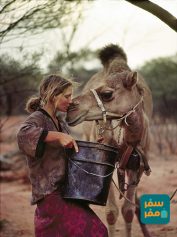
Robin Davidson is one of the most influential women in the field of travel, especially solo travel and the recording of her journey into solitude. In her thirties, she experienced a nine-month journey alone in the Australia’s most remote inhospitable deserts, and she talks about the effects of solo travel and its connection to the coronavirus pandemic.
Davidson has designed and carried out many solo trips. A film titled Tracks was produced about her nine-month journey in 2013, which conveys a little of the feeling of solo travel. Below is a translation of her interview with Times magazine.
ثبت سفر به درون تنهایی |
 |
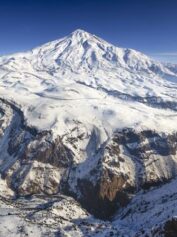
Despite many cultural and social restrictions resulting from unequal opportunities and budget allocations, in July 2000, Mount Damavand witnessed the first national ascent by Iranian women. You can read the story of this ascent in the link below.
اولین صعود سراسری بانوان کشور به بام ایران |
 |
قصه دماوند در قاب تصویر |
 |
In the spring/in June 2024, a collection of articles about travel, its use in popular culture, the lexical meaning of travel, and the book The Hero’s Journey by Joseph Campbell were published in Vinesh website, which you can read at the link below.
سفر تنهایی؛ من ساکن سفرم … |
|
In conclusion, I would like to emphasize once again that there are many unknown women who have activated and are still workinging on the path of awareness, progress, independence and personal development. If anyone is interested in a conversation, we would be happy to contact us in Vinesh. These conversations can be an opportunity for exchange of ideas and inspiration.